
Does Appearance Matter in Leadership? Why Your Work Doesn’t Speak for Itself
Quick Answer
Yes, appearance matters in leadership, but not in the way most people think. A sharp look will not carry your career, but a careless one can cost you opportunities before anyone weighs your results.
Appearance is one visible piece of executive presence, the quality that tells people whether to trust you as a leader. For women in leadership, who are often judged more closely on how they look, understanding image is a career skill, not a beauty concern.
There’s a scene from Netflix’s The Diplomat that I can’t stop thinking about.
Ambassador Kate Wyler, played by Keri Russell, is brilliant at her job. She’s intelligent, experienced, and calm in situations that would rattle most people. She also doesn’t care much about how she looks. Her hair is undone, her clothes are an afterthought, and she seems to believe that says something good about her: I’m too busy doing the real work to worry about my appearance.
Vice President Grace Penn, played by Allison Janney, sees it differently. She tells Kate that her appearance isn’t communicating what Kate thinks it is. Then she names what Kate is giving away: soft power, the influence we have before we ever say a word.
I’ve met a lot of Kates. Capable, hardworking women who believe their work should speak for itself. I understand that belief, because I held a version of it myself.
But here’s the truth. Your work doesn’t speak first. Your image does.
What Is Image in Leadership?
Image is how others see you. It includes your appearance, but it doesn’t stop there. It’s your posture, your facial expressions, your eye contact, your tone of voice, and the words you choose. It’s how you walk into a room and how you carry a conversation. Every one of those things communicates something about you, and people are reading it long before they’ve seen your work.
That’s why I believe trust and confidence start with looking the part.
In earlier posts, I’ve written about attitude, mindset, identity, and self-belief. That’s the inside work, the A in my AIM Methodology: Attitude, Image, and Self-Management. This post turns to the I: Image.
Why Does Image Matter in Leadership?
Image matters because people judge your competence within seconds, and research shows those snap judgments are hard to switch off, even when people try.
Why the room decides so fast
There’s a name for what happens when people size you up: the Halo Effect.
In 1920, psychologist Edward Thorndike studied how military officers rated the soldiers under them on separate qualities like physique, intelligence, leadership, and character. The officers were told to judge each quality on its own. They couldn’t. Soldiers who made a strong physical impression were also rated as smarter, better leaders, and of higher character, without evidence to support it.
A century later, the research keeps confirming it. In 2019, Princeton researchers published a study in Nature Human Behaviour showing that people rated the same face as more competent when it was paired with clothing that looked slightly “richer.” Even when participants were told that clothing had nothing to do with competence, and even when they were explicitly asked to ignore it, the effect held.
That’s what I mean when I say people who look the part build confidence in others faster. It isn’t vanity. It’s how our brains are wired to make sense of people quickly.
The Halo Effect also has an opposite, sometimes called the horn effect. One negative impression can cast a shadow over everything else. A wrinkled jacket, a distracted expression, or a careless email can cause people to question skills you’ve spent years building.
Appearance is a filter, not a factor
I want to be careful here, because I’m not saying appearance is what gets you promoted.
Sylvia Ann Hewlett’s 2012 research at the Center for Talent Innovation (now Coqual) is some of the most widely cited work on executive presence. Only 5% of the senior leaders surveyed named appearance as a key factor. But every one of them recognized that appearance could derail a high-potential professional.
That’s why I think of appearance as a filter, not a factor. Looking polished won’t earn you the promotion on its own. Looking unprepared can quietly take you out of consideration before anyone looks at your results.
It’s also why I write the AIM Methodology as multiplication: Attitude × Image × Self-Management = Presence. If one of those numbers is close to zero, it doesn’t matter how strong the others are. Kate Wyler’s attitude and competence are off the charts. Her image is pulling her presence down anyway.
How Does Image Affect Professionals?
Image can open doors or close them, and the right image depends on your role and your audience, not on how dressed up you are.
What my mother taught me, and what my students taught me
My mother had a rule: “It’s always better to be a little overdressed than underdressed.” She believed that showing up polished was a way of respecting yourself and the people around you, and she raised me to live by it.
So when I took a job as a middle school math teacher and department head in a small rural town in South Texas, I showed up on the first day in a professional outfit, ready for what I was sure would be a transformational year. The school was under pressure to raise test scores, and I wanted to prove I could do it. I skipped the icebreakers and went straight into the lesson.
I thought I was modeling professionalism. My students saw something else. They saw a teacher who was cold, disconnected, and not interested in who they were. Most of them didn’t look like me, and most spoke English as a second language. My polished clothes and my all-business approach told them the same story: I’m here for your test scores, not for you.
It didn’t take long for me to become one of the most disliked teachers on campus.
So I changed how I showed up. I traded my professional clothes for jeans and t-shirts. I toned down my makeup and switched my lipstick for Chapstick. And I started spending the first ten minutes of every class just talking with my students about their day, their families, and what they cared about. The tension in my classroom began to fade almost immediately.
My mother wasn’t wrong. But that year taught me the rest of the lesson. Looking the part doesn’t always mean dressing up. It means dressing for your role and for your audience. You don’t get to decide what your image says. The room does.
Is it fair?
Let’s say it out loud: women are judged on appearance more than men are.
The research backs that up. Researchers at the University of Hertfordshire found that even small changes to a woman’s office outfit could lower perceptions of her competence, especially when she held a senior role. In Hewlett’s research, women reported being held to a stricter standard, and 81% of women and professionals of color who received feedback on their executive presence said they weren’t sure how to act on it.
So no, it isn’t fair. But it is real, and pretending it doesn’t happen doesn’t protect anyone. I would rather understand how image works and use it on purpose than let it work against me without my knowing.
Using it on purpose doesn’t require a big budget. The same Hertfordshire team studied men’s suits and found a man was rated as more confident and successful in a tailored suit than in an off-the-rack version that differed only in small details, and people formed that impression in a matter of seconds. The difference wasn’t price. It was fit, care, and intention.
The most powerful women in the world look like powerful women. Not because they all dress the same, but because they’ve decided what they want people to see, and they show up that way.
What Are the Most Effective Ways to Improve Your Image?
Start with your audience, not your closet. Decide what the people in the room need to see to trust you, then make sure everything about you tells that same story.
Before your next important meeting, presentation, or interview, ask yourself three questions:
Who is my audience, and what do they need to see to trust me?
Does what I’m wearing fit my role and this room?
Do my body language, tone, and words tell the same story as my appearance?
When all three line up, your image stops competing with your influence and starts supporting it.
Try it before one meeting this week. Write your three answers down the night before. If one answer doesn’t match the other two, that’s the one to work on first.
What Mistakes Should Professionals Avoid?
The biggest mistake is believing your results will speak before your image does.
Kate Wyler makes that mistake. I made a different one in South Texas. Here are the four I see most often:
Assuming your work is enough. Strong results can’t help you if people have already decided you’re not leadership material.
Dressing up without reading the room. Polish that ignores your audience can feel cold, the way my first-day outfit did.
Treating image as only clothing. Your expressions, tone, and attention speak just as loudly as your jacket.
Ignoring the small details. One sloppy moment can color how people see everything that comes after it.
The fix for all four is the same. Think about your audience first, and show up on purpose.
How Can Leaders Apply These Lessons?
Leaders apply these lessons by treating image as a skill they build on purpose, the same way they build communication or decision-making.
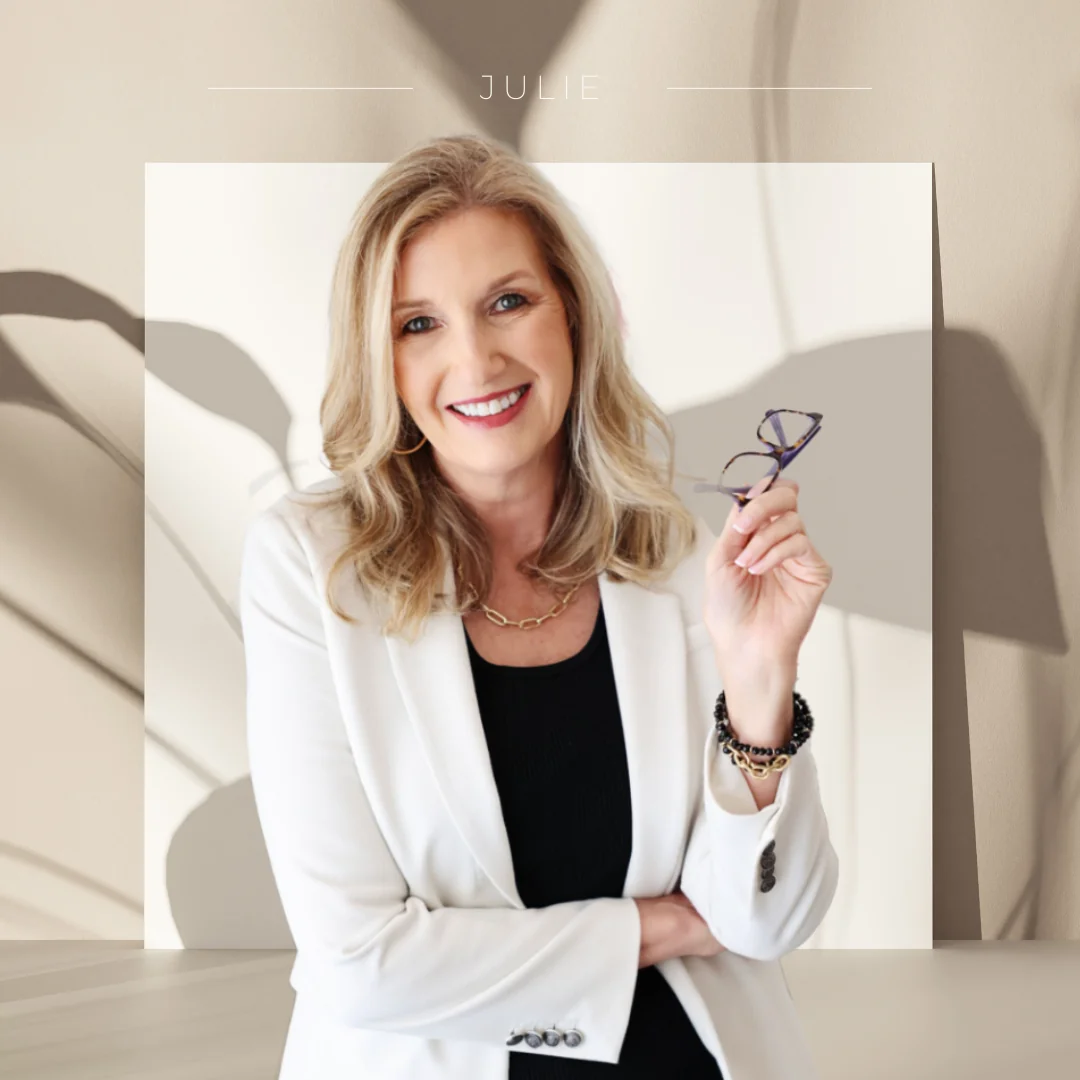
Julie Jones, founder and CEO of Today’s Professionals Consulting, developed the AIM Methodology to help leaders build presence from the inside out. In AIM, Attitude is the mindset a leader brings to risk, change, and possibility. Image is how others see you, built from how you treat people when nothing is at stake. Self-Management is the discipline practiced when no one is watching.
The best-known alternative is Sylvia Ann Hewlett’s research model, which describes executive presence as how a leader carries authority under pressure, communicates, and presents. Here’s how the two compare:
Hewlett’s executive presence model | AIM Methodology | |
|---|---|---|
What it describes | What senior leaders notice in others | What a leader builds in themselves |
Main parts | How a leader carries authority under pressure, communicates, and presents | Attitude, Image, and Self-Management |
Where appearance fits | Its own part, ranked last | One piece of Image, alongside how you treat people |
How the parts work together | Ranked by importance | Multiplied, so one weak part lowers the whole |
Both models agree that appearance is not the main event. AIM adds the part leaders can act on every day: your image is built in how you treat people, not just in what you wear.
If you lead a team, the lesson runs both ways. Watch your own image, and watch for the halo effect when you judge others. When someone on your team needs to work on their presence, give them a specific moment and a specific behavior, not a vague label.
What Are the Key Takeaways?
People read your image before they ever see your work, and they do it in seconds. Appearance works as a gate, not a prize: it rarely earns the promotion, but it can block one. Looking the part means dressing for your role and your audience, not dressing up for its own sake. Women face a stricter standard, which makes using image on purpose a form of protection. And image is bigger than clothing. It’s how you carry yourself and how you treat people.
So I’ll leave you with the question that scene raised for me: Who’s right, Kate or Grace? Should your work speak for itself, or is your image part of the job?
Tell me where you land in the comments.
Because how you show up matters. It’s not just leadership. It’s how you’ll be remembered.
How Can You Take the Next Step?
If your image isn’t telling the same story as your work, that’s fixable. Julie works with leaders, especially women in leadership and women in male-dominated industries, to build presence through the AIM Methodology, from mindset to how they show up in the room. Her book, The Presence Effect, goes deeper on all three parts.
If you’re ready to strengthen your leadership skills and professional presence, schedule a discovery call with Julie Jones to explore how she can help.
FAQ
Does appearance matter at work?
Yes. Appearance affects how competent and trustworthy people think you are, often within seconds of meeting you. It is rarely the reason someone gets promoted, but a careless look can raise doubts that overshadow strong results. The goal is not expensive clothes. The goal is looking prepared for your role and your audience.
What is the halo effect at work?
The halo effect at work is when one strong impression, like a polished appearance or confident greeting, makes people assume you are good at other things too. Psychologist Edward Thorndike named it in 1920. Its opposite, the horn effect, happens when one bad impression drags down how people judge everything else about you.
Are women judged more on appearance at work?
Research says yes. In Sylvia Ann Hewlett's executive presence research, women reported stricter appearance standards and less feedback on what those standards were. A University of Hertfordshire study found small outfit changes lowered competence ratings for a woman described as a senior manager, but not for one described as a receptionist.
Is executive presence just about looking polished?
No. Appearance is only one part of executive presence, and senior leaders rank it as the least important part. Julie Jones' AIM Methodology (Attitude, Image, and Self-Management) treats image as how others experience you, including your posture, tone, eye contact, and how you treat people. Polish without a strong attitude and steady self-management will not hold up.
What should I do if I'm told I need more executive presence?
Ask for specifics. Vague feedback is common, and Hewlett's research found most women and professionals of color who got it did not know how to act on it. Ask what the person saw, in which moment, and what they would have expected instead. Then work on one behavior at a time.